
From pledges to deployment: What NYC Climate Week 2025 revealed
29.09.2025
Last week we had the chance to participate in NYC Climate Week 2025, which has rapidly grown into one of the most important international gatherings for clean technologies. With ~100,000 participants, ~1,000 official events, and countless side-meetings, New York now positions itself as the alternative to COP and Davos — but with a sharper, more operational edge.
Here are some key insights:
1. The Conversation is Maturing
This year was less about general “climate” rhetoric and much more about energy systems, AI, resilience, and security. The room was filled with operators and infrastructure players, not spectators. Importantly, even conservative infrastructure investors are openly discussing the investability of cleantech projects. For Estonian companies, this is a strong signal: if you can demonstrate scalability and resilience, capital is ready to listen.
2. Policy Commitments Back the Market
At the UN, China and 120+ countries pledged new emissions reductions, reaffirming global direction despite political tensions. The EU’s leadership role was noted often, giving European cleantech companies credibility in the global market. For Estonian firms, aligning with EU frameworks and standards is a strength, it positions you as a trusted partner for global deployment.
3. Estonia Showcased at the Highest Level
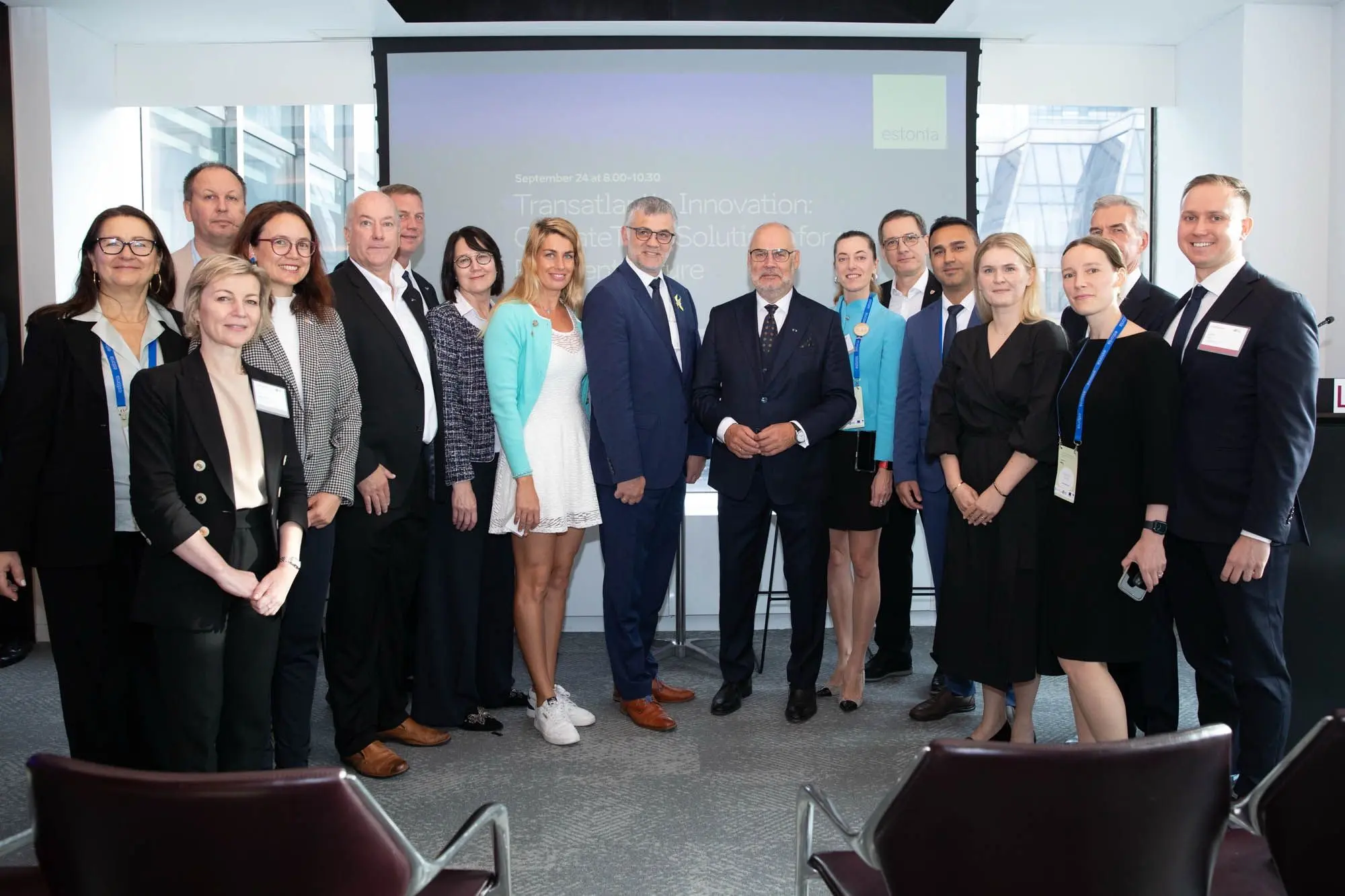
The President of Estonia hosted a cleantech event in New York, where he underlined that climate change is not only a challenge but also a major economic opportunity. This visibility matters: Estonian companies are seen as part of the solution, and it’s on us to seize the momentum and grow partnerships abroad.
4. US Market Opportunities Are Real
We met with the NYC Economic Development Corporation (NYCEDC), which is deploying USD 100 million into climate innovation initiatives such as BATWorks at the Brooklyn Army Terminal. Their programs include pilot funding, startup incubation, and connections to city infrastructure. NYCEDC supports hundreds of startups and directly links them to procurement opportunities.
In parallel, the New Jersey Economic Development Corporation is offering packages of grants, shared infrastructure, and acceleration services to attract climate tech companies. For Estonian startups exploring US entry points, NYC and New Jersey are gateways worth serious consideration.
5. Scaling Solutions with Fortune 100
One of the most valuable sessions I joined was “From Data to Impact: Scaling Climate Tech & Innovation through Public-Private Partnerships”, produced by How2Scale at Capgemini’s Applied Innovation Exchange. The event brought together a coalition of leaders from the UNDP, Mars, Kyndryl, and Fortune 100 companies, alongside climate investors and startups.
The discussions were highly relevant for startups from Estonia:
- Enterprises are operationalizing sustainability and actively looking to integrate startup solutions into their innovation strategies.
- Data is becoming the universal language of climate performance, creating demand for technologies that can measure and verify impact.
- For startups, partnerships with corporates and public actors are the fastest path to scale.
- Cross-sector collaboration — from global corporations to UN agencies — is already happening, and agile startups are expected to play a central role.
The event confirmed that global corporates are not just making pledges, they are aligning climate goals with business strategy and seeking startup partners to deliver measurable impact.
Takeaway for Estonian Cleantech
- The market appetite for scalable, resilient cleantech solutions is stronger than ever.
- Estonia has visibility and credibility at the highest political level. We should leverage this.
- The US East Coast, through NYCEDC and NJ EDC, is actively seeking international cleantech partners and deploying serious funding.
- Aligning with EU frameworks gives us an edge globally, especially in a market where trust and standards matter.
- Fortune 100s are looking for startup partnerships now and data-driven, scalable solutions from Estonia can fit directly into this global demand.
NYC Climate Week 2025 confirmed what many of us already sense: cleantech is not niche anymore — it is core infrastructure. Estonian companies that act now, seek partnerships, and position themselves globally will be the ones to benefit.